
Japan
Setsubun: Japan’s Playful Ritual That Welcomes Spring
Published on 30 January 2026
Hello everyone,
While winter still lingers in Paris and shop windows begin to soften with hints of spring, Japan prepares for a joyful and symbolic moment: Setsubun, a traditional celebration marking the end of winter and the arrival of a new season.
Much like France’s Chandeleur, where golden crêpes celebrate the return of light, Setsubun embodies a moment of transition—one filled with laughter, shared rituals, and a renewed sense of optimism.
Setsubun: a moment of transition and renewal
The word Setsubun literally means “the division of seasons.” In the past, Japan considered the beginning of spring (Risshun) as the true start of the year. Setsubun therefore became a meaningful pause: a time to let go of negative energies and prepare for a fresh cycle.
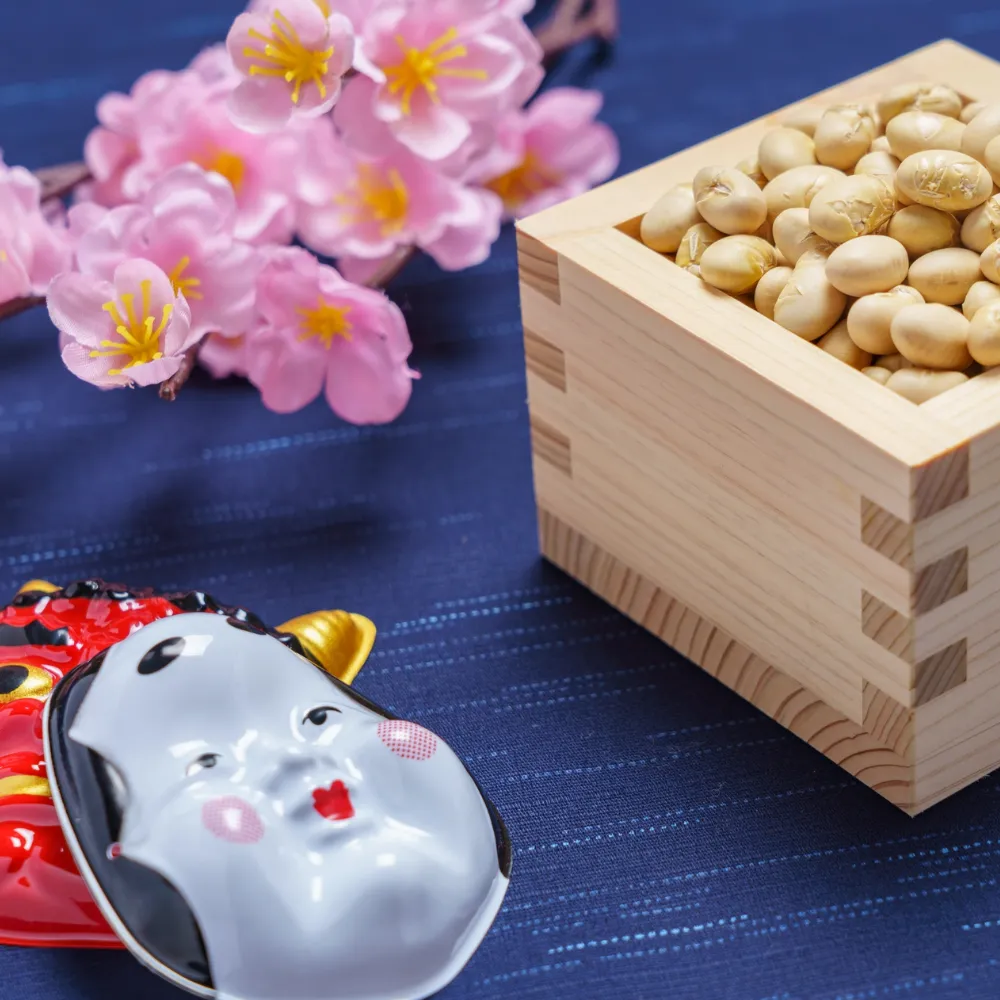
Across the country, the atmosphere changes. Shops display colorful demon masks, temples echo with cheerful voices, and a sense of collective excitement fills the air. Winter slowly loosens its grip, making room for movement, joy, and anticipation.
Throwing beans to invite good fortune
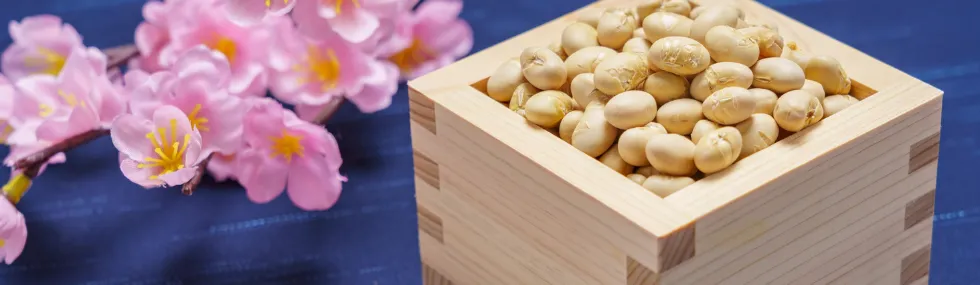
At the heart of Setsubun lies a simple yet powerful ritual: mamemaki, the throwing of roasted soybeans.
Why beans? Because they symbolize vitality and protection, and their name echoes the idea of “driving away evil.” By tossing beans, people symbolically expel misfortune and invite happiness into their homes.
- “Oni wa soto, fuku wa uchi!” — Demons out, fortune in!
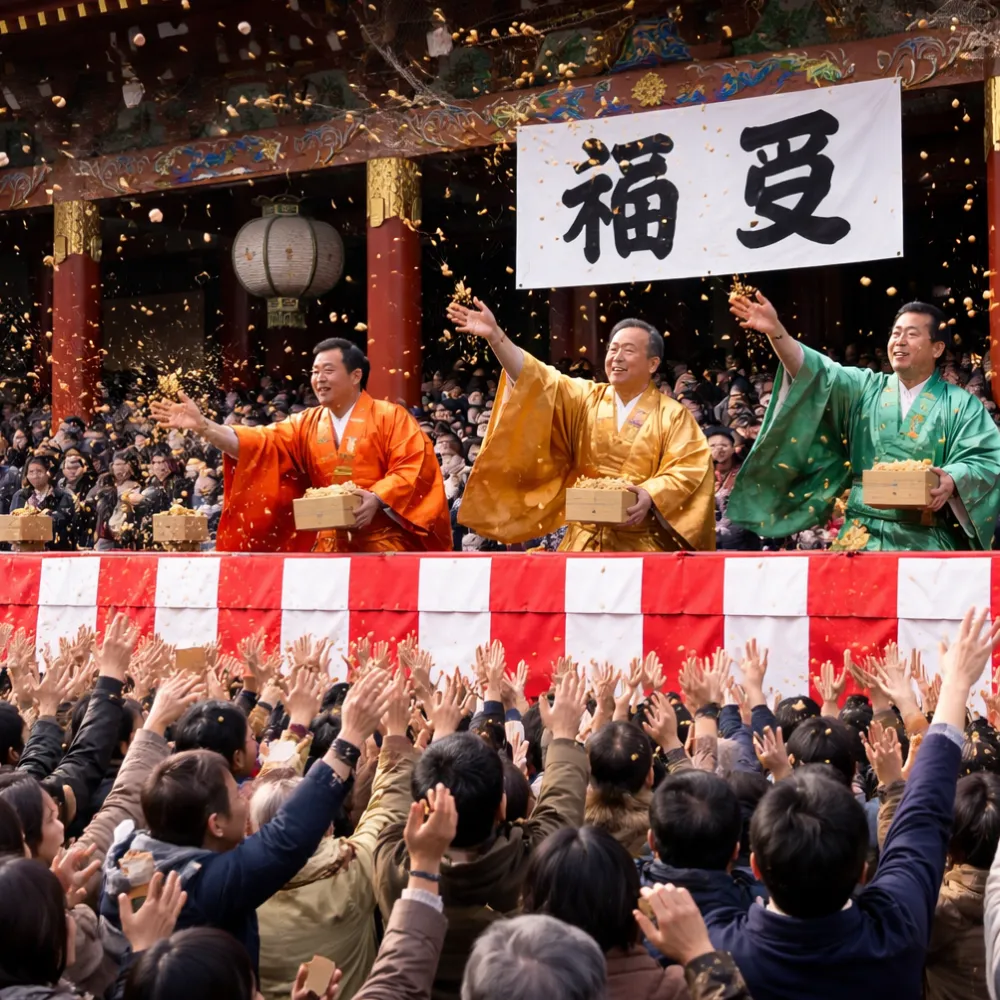
At home, children gleefully throw beans at a parent dressed as a demon, filling the room with laughter. It’s a lighthearted, unifying moment shared across generations. - At temples, beans are thrown from elevated platforms into enthusiastic crowds. People reach out eagerly to catch these “beans of good luck,” creating an atmosphere closer to a festival than a solemn ritual.
The warm aroma of roasted beans, combined with laughter and excitement, transforms the cold winter air into a promise of spring.
Eho-maki: tasting good fortune in silence
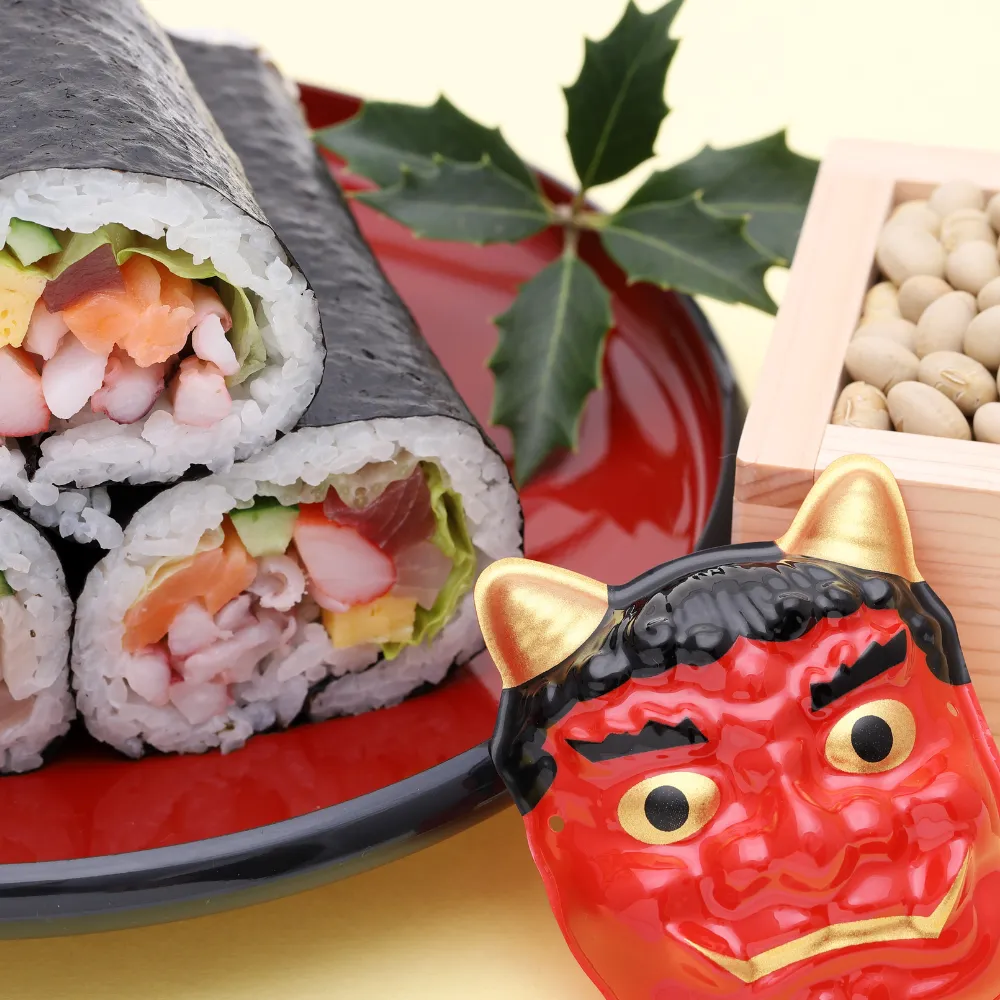
After the excitement comes a quieter tradition: eating eho-maki, a large sushi roll consumed whole, in silence, while facing the year’s lucky direction.
- Not cutting the roll symbolizes the wish to preserve bonds and good fortune.
- Seven ingredients, inspired by the Seven Gods of Fortune, represent prosperity and balance.
It’s a ritual both playful and introspective, where wishes are made quietly, with intention.
A tradition rooted in modern life
Much like lighting a candle or creating a personal ritual to reset the mind, Setsubun acts as a punctuation mark in the year.
Letting go of what no longer serves us, welcoming what lies ahead—this simple, positive philosophy remains deeply relevant today.
In a fast-paced world, Setsubun reminds us of the importance of pausing, clearing space, and embracing new beginnings with lightness and joy.
Experiencing Setsubun in Japan
If you happen to be in Japan in early February, don’t miss the chance to experience Setsubun firsthand. Witnessing bean-throwing ceremonies at historic temples, sharing the crowd’s energy, and feeling the collective excitement offers a unique glimpse into the spirit of Japanese culture.
A warm, joyful celebration that announces the return of light and renewal—Setsubun is a beautiful way to experience Japan beyond sightseeing.
This year, as always, we will throw our beans with heartfelt wishes for your happiness, health, and clarity in the year ahead.