
Japan
Tsukimi: Celebrating the Beauty of the Autumn Moon in Japan
Published on 13 October 2025
Hello from Japan!
As the autumn sky turns crisp and clear, the moon begins to shine at its brightest. In Japan, this magical moment is honored through “Tsukimi” (moon viewing) — a centuries-old tradition that celebrates beauty, gratitude, and the rhythm of nature.
Today, we invite you to discover this poetic Japanese custom.
What is Tsukimi?
Tsukimi takes place on the night of the 15th day of the 8th month of the lunar calendar, when the moon is believed to be at its most beautiful. This night is called Jūgoya (十五夜), and in 2025 it falls on October 6th.
While many cultures admire the moon, in Japan this act goes beyond simple appreciation. Tsukimi is a moment to give thanks for the harvest and to pray for abundance in the year to come.
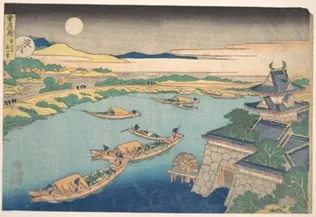
The tradition is said to have arrived from China during the Heian period (8th–12th century). At that time, Japanese nobles would set boats on ponds, admire the moon’s reflection on the water, and compose poetry in elegant moonlit gatherings.
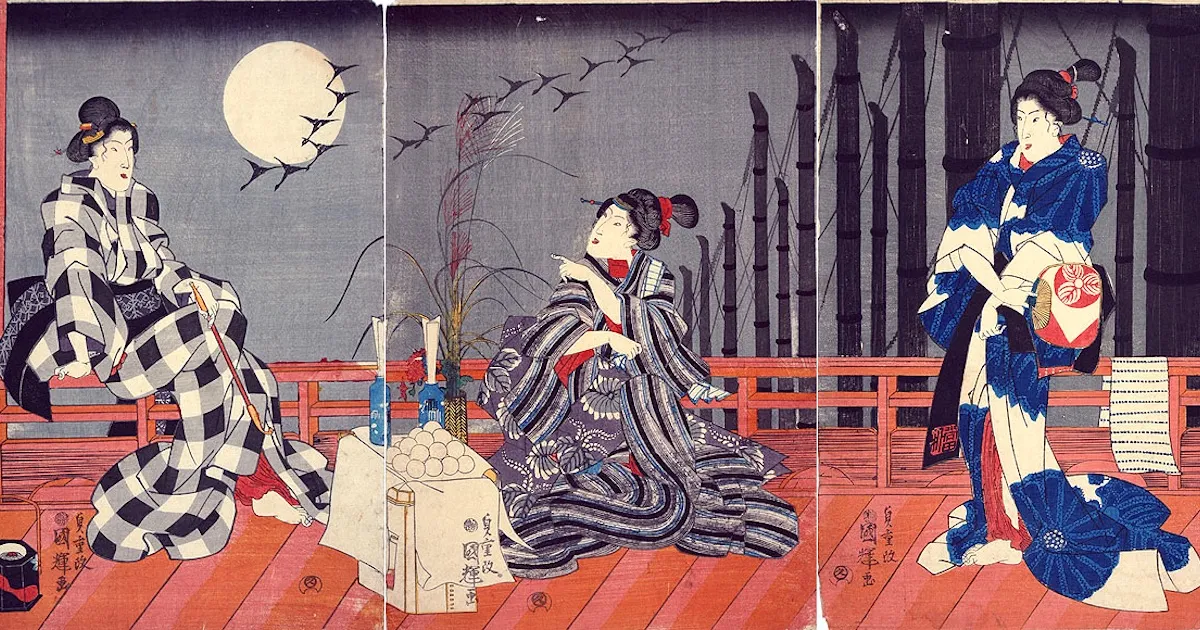
By the Edo period, Tsukimi had become a celebration shared by the wider population, taking on the spirit of a harvest festival. People paused from their work, gathered with loved ones, and enjoyed quiet moments under the glow of the full moon.
How do you celebrate Tsukimi?
Tsukimi is not just about looking at the moon — it is also about preparing small symbolic offerings that deepen the experience.
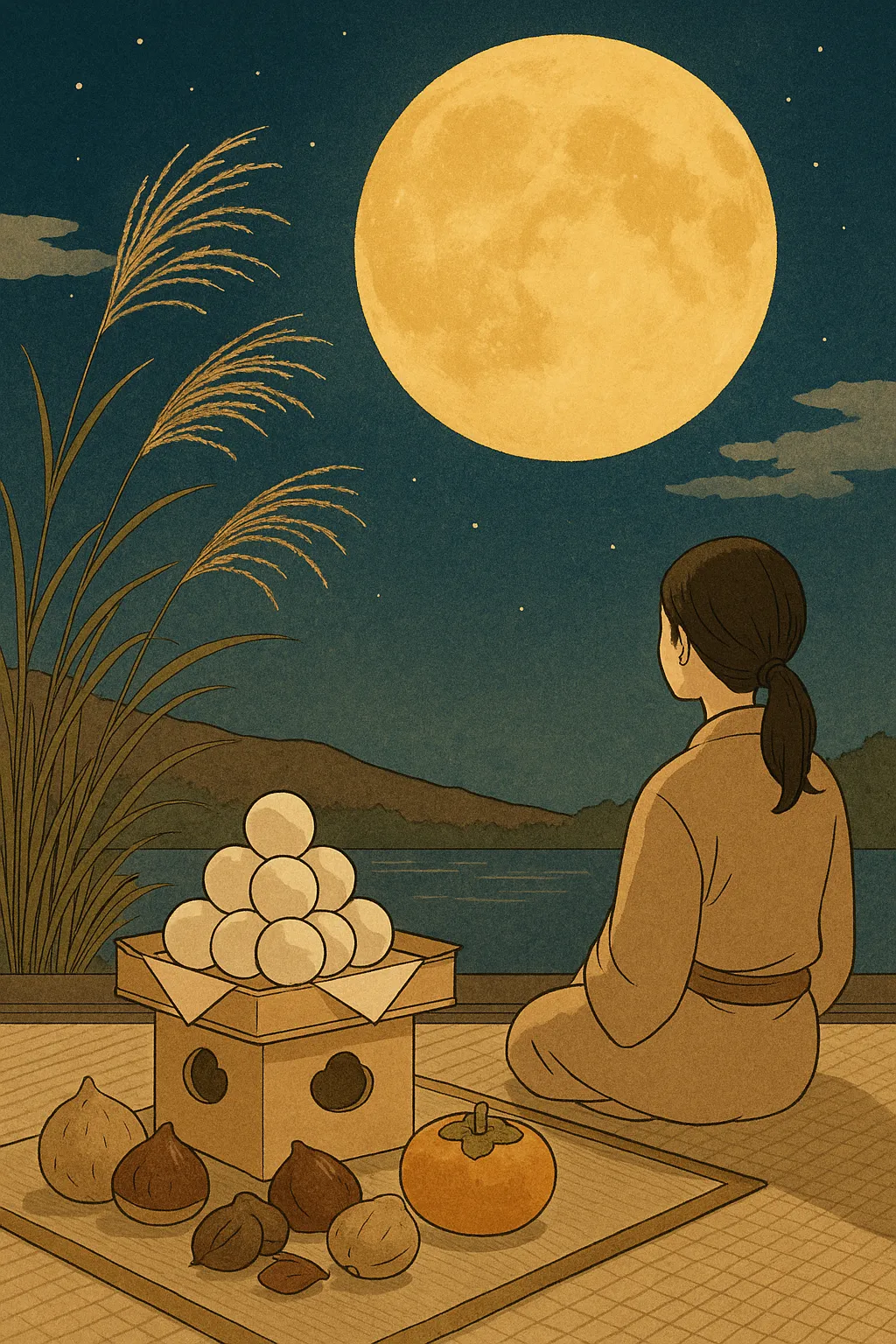
🌕 1. Tsukimi Dango (rice dumplings)
Perhaps the most iconic symbol of Tsukimi. These round white dumplings are stacked in a pyramid shape and offered to the moon.
Their round shape represents the full moon, and they express gratitude for the harvest and hope for prosperity.
Traditionally, the dango are shared among everyone — a way to receive the moon’s blessing.
🌾 2. Pampas grass (susuki)
Resembling rice stalks, susuki symbolizes a rich harvest and is believed to ward off evil.
After Tsukimi, many people keep it in their homes as protection. The sound of susuki swaying in the breeze evokes the essence of autumn.
🍠 3. Seasonal harvest foods
Because Tsukimi takes place during harvest time, people often offer taro, chestnuts, or persimmons — freshly gathered autumn ingredients.
Another name for this night is Imo Meigetsu (“Taro Moon”), highlighting the connection to the earth’s bounty. Taro in particular symbolizes fertility and the healthy growth of future generations.
With these offerings placed in a spot where the moon is visible, people quietly admire the night sky, enjoy dango, sip a little sake, and share peaceful conversation.
In the midst of busy daily life, Tsukimi offers a rare opportunity to slow down and reconnect with nature — a moment of serenity and emotional richness.
Tsukimi in Japanese haiku
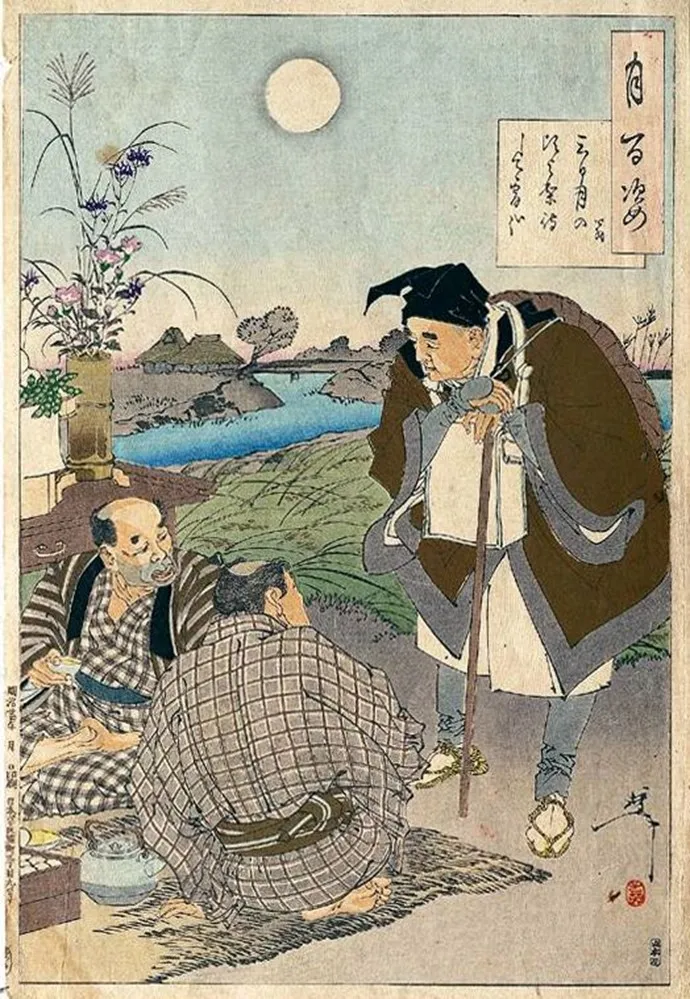
Japanese poets have long expressed seasonal beauty and emotion through haiku (5-7-5 syllables). Naturally, Tsukimi appears in many famous poems.
“The bright full moon—
walking around the pond
all through the night.”
— Matsuo Bashō
Bashō, the most famous haiku poet, was so captivated by the moon that he wandered all night, forgetting time itself.
“A child cries:
‘Get me the moon!’”
— Kobayashi Issa
With humor and tenderness, Issa captures the innocent wonder of a child who longs to reach the beautiful moon in the sky.
“On a taro leaf
the dango are placed—
a moon-viewing night.”
— Masaoka Shiki
Shiki paints a simple, heartwarming scene of Tsukimi using nature as its setting — humble, authentic, and deeply poetic.
What Tsukimi reveals about the Japanese spirit
Tsukimi is more than a seasonal tradition.
It reflects key values in Japanese culture:
- Gratitude for nature’s gifts
- Appreciation of beauty in simplicity
- Harmony between people and the natural world
- Sharing peaceful time with others
Even today — despite city lights and busy schedules — many Japanese people still look up at the moon in autumn, participate in Tsukimi events, or place offerings at home.
An invitation to look up
If you visit Japan in autumn, take a moment to look at the night sky.
Under the glow of the full moon, you may feel a connection to something timeless — a culture that finds beauty in stillness, gratitude, and the changing seasons.
Even from afar, perhaps you, too, can enjoy your own Tsukimi moment — wherever you are.
As I gaze at the moon, I often think of Paris and the beautiful bond between our two cultures.
May this tradition inspire you as much as it continues to inspire us.